virtualDavis

ˈvər-chə-wəlˈdā-vəs Serial storyteller, poetry pusher, digital doodler, flâneur.
Twitter
@virtualDavis

7 Insanely Useful Ways to Search Twitter

Google graphic via OPEN Forum

If you’re a Twitter “power user” (i.e. you update your status frequently; monitor your brand, business, etc. on Twitter; and/or leverage Twitter’s massive userbase to search for prospects) you should read John Jantsch’s article at OPEN Forum. Here are the highlights:

1) Target by occupation: “you can create a search that plows through Twitter and gives you a list of all the users” that include your specific keyword (attorney, quarterback, etc.) for their username and/or real name in their Twitter profile pages.
2) Target by biographical information: If you want to scan more than just usernames and real names, Google can hep you search for key phrases in Twitter users’ intext attributes.
3) Target by location using http://search.twitter.com
4) Use Google Alerts to track new Twitter sign ups

Learn more about these smart Twitter search techniques and three more at OPEN Forum.

Enhanced by Zemanta

20 Creative Logos

Image via toxel.com

Brainstorming a clever, minimalist logo, and these unique, creative logos appeared out of the ether. Maybe they’ll inspire me…

Google Acquires Picnik

Have you used picnik? It’s an online image-editing software that’s free, easy and powerful. And it integrates nicely with flickr, facebook, etc. It’s no PhotoShop, but did I mention that it’s free?

image via mashable.com

Enhanced by Zemanta

Chilean Quake Likely Shifted Earth’s Axis

The earthquake that killed more than 700 people in Chile on Feb. 27 probably shifted the Earth’s axis and shortened the day, a National Aeronautics and Space Administration scientist said.

via Bloomberg.com

Are NASA scientists pulling our legs? Wow!

Reality Check: Book Publishing in the Digital Age

The Internet tsunami that has swept through the newspaper and magazine industries, transforming the landscape and leaving debris everywhere, has at last arrived at book publishers. According to today’s New York Times, publishers now acknowledge that e-books cost less to produce than the traditional paper models and therefore ought to sell for less. Amazon has been selling them on the Kindle for $9.99, much to the publishers’ dismay. Now several large publishers have agreed with Apple to sell books on the iPad for $12.99 to $14.99. Hoping this line will hold, publishers scold that (as the clearly sympathetic Times puts it) “consumers exaggerate the savings and have developed unrealistic expectations about how low the prices of e-books can go.”

kinsley_mar1_kindle_post.jpg

richardmasoner/Flickr CC

Book publishing involves many expenses that book buyers may not appreciate, the publishers say. That is indeed true. The average hardcover book, says the Times, sells for $26. Here is just a partial list of where that $26 goes:

  • $2.00 for lunches
  • $0.05 to $7.00 for the book party
  • $1.05 for the author tour
  • $0.65 for seven editors to attend the Frankfurt Book Fair
  • $0.60 for lunches at the Frankfurt Book Fair
  • $1.50 for drinks at the Frankfurt Book Fair
  • $2.00 to cover wild overpayments to 15-minute celebrities or Washington bigshots for books that will never earn back their huge advances but the cost has to be amortized somehow
  • $0.50 for lawyers
  • $0.40 for editors
  • $6.00 for free review copies
  • $17.50 for employee health care
  • $1.60 Whoops! Forgot these lunch receipts from last month. Sorry.

The book industry is one of the most custom-laden and set in its ways. It still can take over a year from the time an author submits a manuscript until the time the book comes out. Even if a manuscript is submitted electronically, it may very well be printed out, edited in pencil with sticky notes, and then keyed back in with new typographical errors. It remains to be seen who has “unrealistic expectations” about life and books in the digital age.

via theatlantic.com

Enhanced by Zemanta

Making the Case for IPad E-Book Prices

In the emerging world of e-books, many consumers assume it is only logical that publishers are saving vast amounts by not having to print or distribute paper books, leaving room to pass along those savings to their customers.

Publishers largely agree, which is why in negotiations with Apple, five of the six largest publishers of trade books have said they would price most digital editions of new fiction and nonfiction books from $12.99 to $14.99 on the forthcoming iPad tablet — significantly lower than the average $26 price for a hardcover book.

But publishers also say consumers exaggerate the savings and have developed unrealistic expectations about how low the prices of e-books can go. Yes, they say, printing costs may vanish, but a raft of expenses that apply to all books, like overhead, marketing and royalties, are still in effect.

All of which raises the question: Just how much does it actually cost to produce a printed book versus a digital one?

via New York Times

Enhanced by Zemanta

3D Sidewalk Art That Will Blow Your Mind

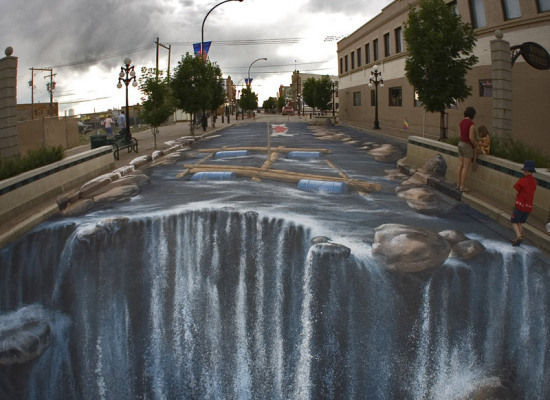
3D Sidewalk Art (via huffingtonpost.com)

3D Sidewalk Art (via huffingtonpost.com)

3D sidewalk art makes the best graffiti ever!

Maybe these fellows will come to my town and chalk up a canyon across the road in order to slow down speeders. 30mph and cars routinely double the speed limit! But strategically selected 3D sidewalk art could change that quickly…

The example above suggests all manner of similar concepts because our road skims the lake shore. Imagine three dimensional chalk art creating the illusion of a vast chasm washed out in the road. Or 3D sidewalk art (in this case it would be more appropriate to call it 3D road art perhaps?) depicting a freighter crashed into and through the road. Or a flock of sheep blocking traffic…

3D sidewalk art to the rescue!

3D Sidewalk Art & Law Enforcement

Instead of punishing the creators of 3D sidewalk art, lumping it together with graffiti and categorically assuming that it is all destructive vandalism, what if we shift our thinking in a more positive direction? What is we deam 3D sidewalk art part of law enforcement’s tools to deter high speed traffic? Instead of pitting law enforcement against the 3D sidewalk artists, law enforcement could become the most vital patrons of the public displays. The art form might get catapulted into its heyday, with municipalities all around the world celebrating the intrepid creators of sidewalk and street illusion. Traffic would slow. Accidents would diminish. Road rage would vanish. The driving and walking public would swap stress for joy, assertive myopia for panoramic vision… Just imagine!

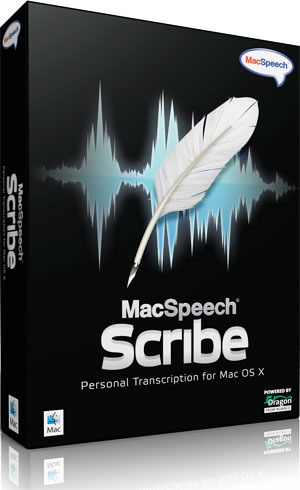
MacSpeech Scribe Enables Speech-to-Text from Digital Recordings

via technewsworld.com

After using Dragon NaturallySpeaking on my PC for years, I was pleased to discover that Nuance was buying MacSpeech. This evolution was one of the final motivators to switch from PC to Mac this fall/winter. Of my two concerns, newly released MacSpeech Scribe solves a big one: transcribing digital voice files to text. This is key for those of us who dictate on-the-go into a handheld device and dump the files into our computer later for transcription. So big plaudits to Nuance for catching MacSpeech up in this regard. The remaining concern is that I’d like to be able to import the vocabulary/pronunciation data that I’ve amassed over the years with Dragon NaturallySpeaking into MacSpeech rather than teaching it from scratch. No matter how much Nuance brags about 99% speech recognition, long-term users know how important this data is. Bottom line, the software becomes more and more valuable the longer you use it, recognizing words and pronunciation better with each new correction you make. But as far as I can tell, MacSpeech Scribe still doesn’t allow me to do this. Is Nuance working on an upgrade that will make this possible? Should I give up home and start from scratch with MacSpeech?

Enhanced by Zemanta

Wayne Koestenbaum Wanders Culture’s Corridors

via columbiaspectator.com

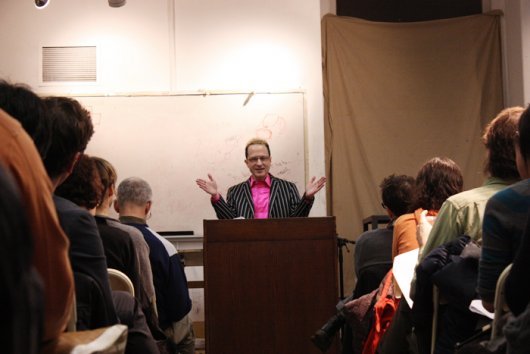
“I like to think of myself as a flâneur, someone who wanders the corridors of culture in my life,” Wayne Koestenbaum said. “I am particularly in pursuit of experiences of bulge, glaze, pause, shock.”

Cycling with the Vélo-Flâneur

via veloflaneur

“Adept of the joys of watching, connoisseur of empathy, the flaneur finds the world ‘picturesque.’ ” ~ Susan Sontag

Cycling is a deeply aesthetic practice. Riding transverses the city and country; it bridges the mechanical and the organic. Here readers will find some thoughts on the intersection of cycling and modernity from the relatively dispassionate and fleeting, yet productive position of the pedestrian or cyclist. This is not about racing. Velo Flaneur focuses on everyday, utilitarian riding, randonneuring, jaunts through urban and natural terrain and watching, listening, and feeling.

The flaneur observed the unfolding metropolis of the nineteenth century in a disconnected manner. Today, from behind the handlebars of a bicycle, one can survey architecture, society, art, politics, interaction, production, consumption, and the natural environment as a flickering rush of images.

via veloflaneur

Welcome to vélo-flâneur, my most recent discovery in an ongoing quest to identify intriguing flaneurs meandering the information superhighway.

Enhanced by Zemanta